Nurturing Responsible Innovators: Design Thinking and Responsible Innovation in Practice
Brain Juice Collective × St. Joseph’s Institution
Together with my team at Brain Juice Collective, we facilitated a two-part workshop series for Year 4 students at St. Joseph’s Institution (SJI), focusing on Design Thinking and Responsible Innovation.
As part of their curriculum, students are required to apply design thinking to improve existing products and services. Our role was to deepen this process, helping them move beyond solutions that “work” toward thoughtful, responsible, and grounded ones in real-world complexity.
Context
Innovation in the real world is rarely linear.
Students often learn design as a structured process, but in practice, it involves navigating ambiguity, trade-offs, and unintended consequences. This programme introduced Responsible Innovation as a complementary lens, encouraging students to consider not just user needs, but also social, environmental, and ethical impact.
Approach
Across two workshops, we combined:
Case-based learning
Interactive quizzes and discussions
Gamified elements and reflection
The goal was to shift students from solution-first thinking toward more critical, systems-aware decision-making.
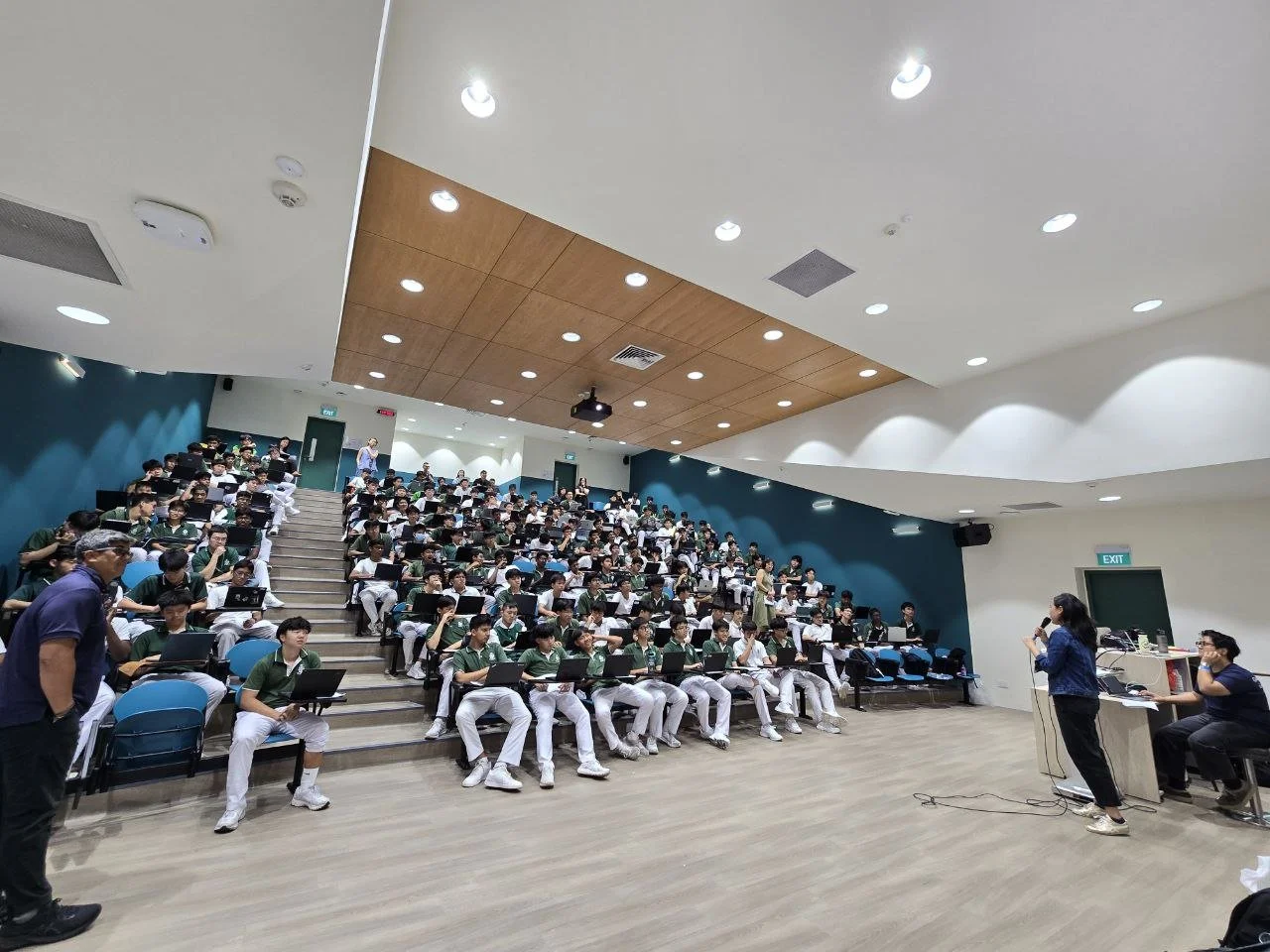
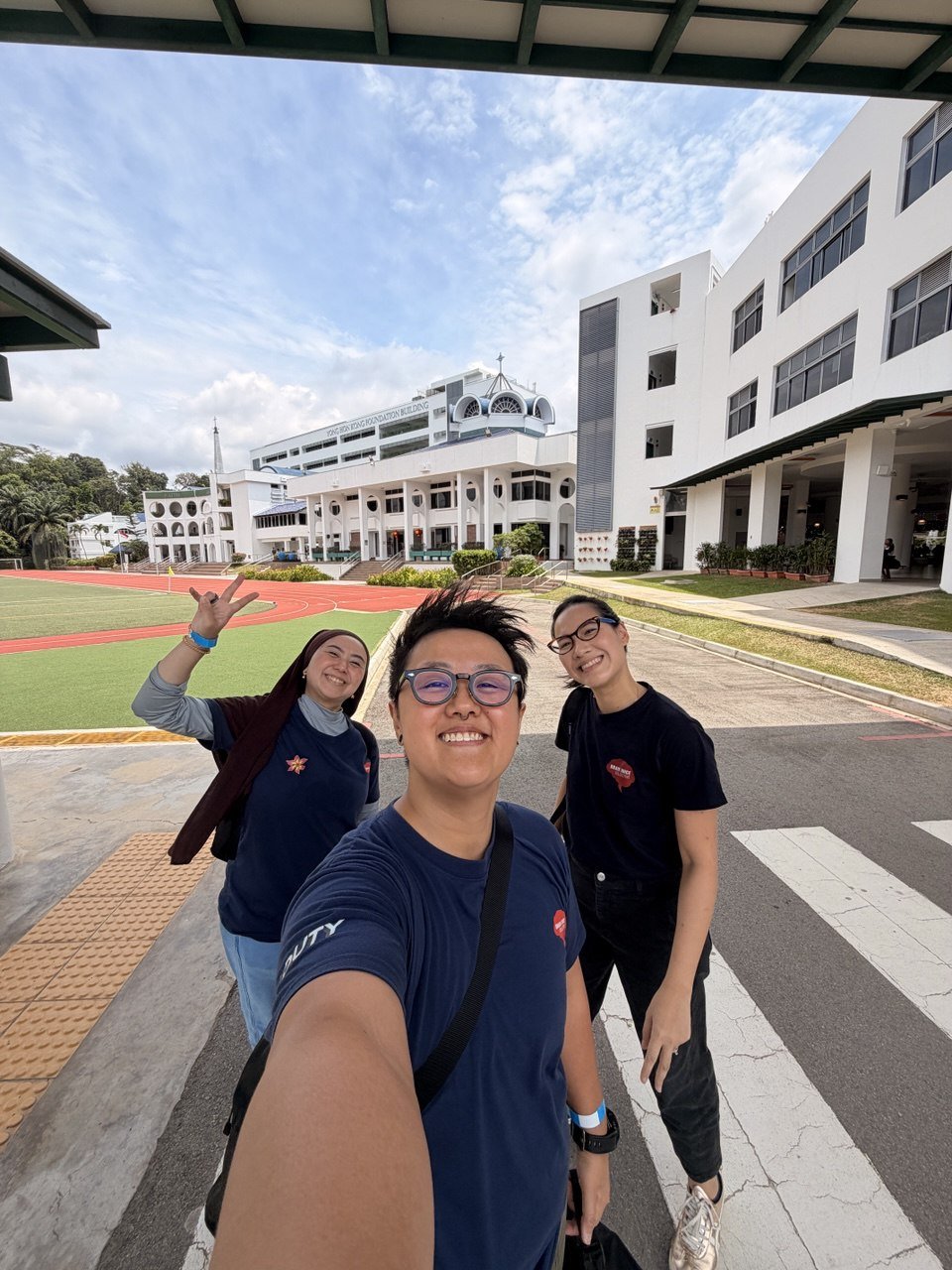
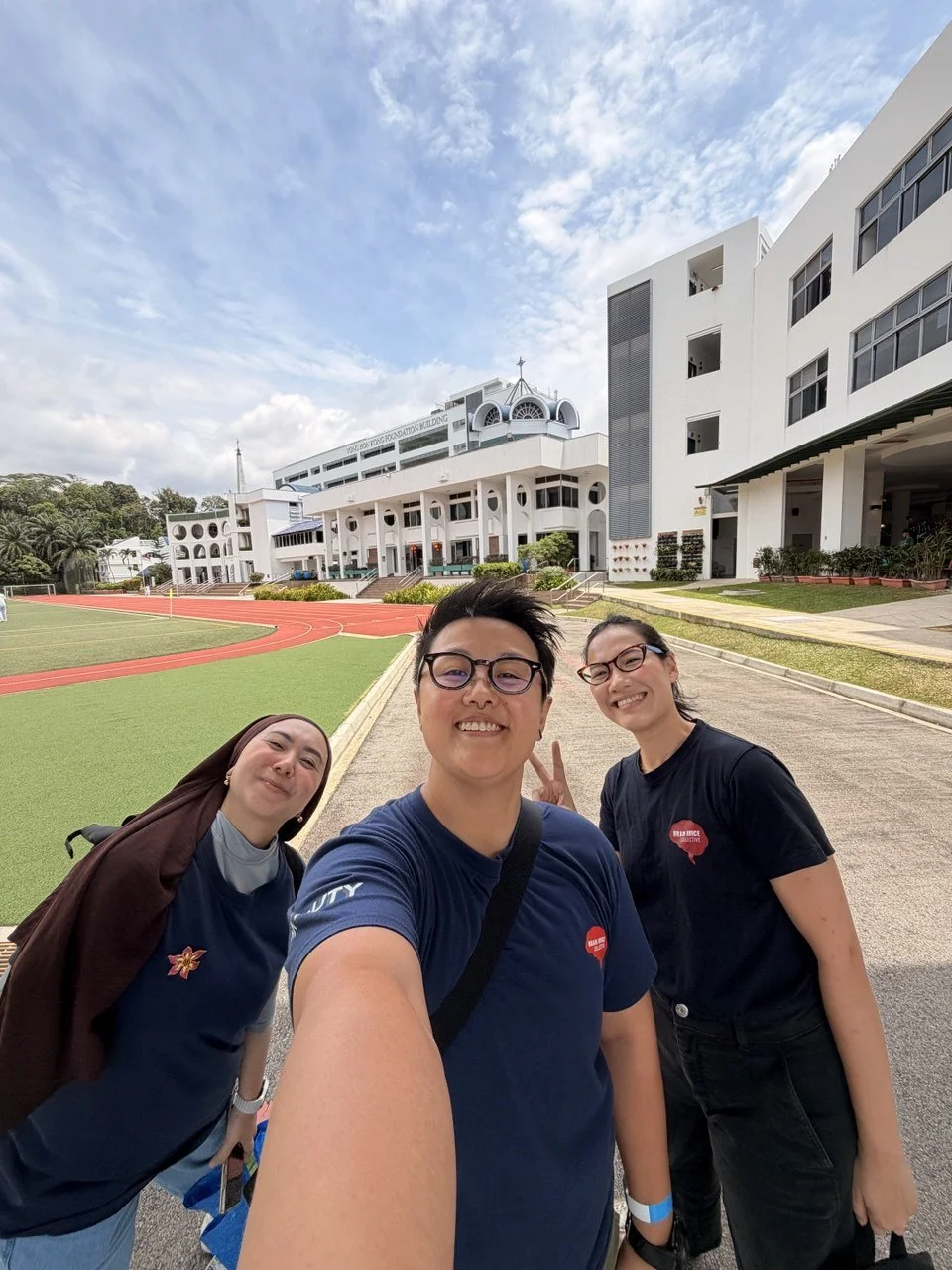
Workshop Highlights
Workshop 1: Navigating Design Complexity
Students applied Design Thinking to real-world scenarios, exploring how innovation involves balancing competing priorities.
While many demonstrated a strong understanding of design stages, responses revealed a tendency to move quickly into solutions, often skipping deeper exploration.
This created an opportunity to reinforce:
The importance of research and discovery
The role of constraints in shaping outcomes
The reality that design rarely has a single “correct” answer
Workshop 2: Systems Thinking Through Play
The second workshop expanded into systems thinking and accountability with a more interactive twist.
To inject energy into the process, we introduced a gameshow-style activity using the RADAr card game.
Students used the cards to rework and improve their proposed solutions, drawing from:
4 dimensions of innovation (RADAr framework)
Multi-disciplinary lenses
Human-centred considerations
This added a structured yet playful layer to their thinking process.
By engaging with the cards, students were able to:
View their ideas from multiple perspectives
Identify gaps and unintended consequences
Strengthen their solutions with more holistic and responsible considerations
The format made the iteration process more dynamic while still grounding it in clear, comprehensive guidelines.
What Shifted
Across both workshops, a clear evolution emerged:
From “Does this solution work?”
→ to “What positive or negative impact might this create?”From user-focused design
→ to systems-aware, responsible innovation
Students began to recognise that innovation does not end at launch but carries ongoing responsibility.
Key Takeaways
There is no single right answer, only informed trade-offs
Unintended consequences matter as much as intended outcomes
Design is continuous, requiring reflection, iteration, and accountability
Reflection
This series reinforced the importance of introducing responsibility early in the innovation process.
By combining structured frameworks with interactive and playful methods, students were able to engage more deeply not just with how to design, but why it matters.
The result was a shift toward more thoughtful, aware, and future-ready innovators.